

November 26, 2007

*click here to listen to this show (might take a minute to load)
-Jessica


Today we present a special program titled Martin and Malcolm: One Vision - Two Voices. Produced, in cooperation with the Maryland Humanities Council, Marc moderated a discussion between Dr. Martin Luther King, Jr. , portrayed by actor Bill Grimmette, and Malcolm X, portrayed by actor Charles Everett Pace. The program was recorded before a live audience at the Baltimore Museum of Art.
-Marcus

-Jessica

First, a disclosure. Having become vegetarian and then learned to cook, in that order, I've never cooked a turkey. Still, Thanksgiving is 3 days away, and at 1pm today we'll be talking about cooking all sorts of things, including turkey, I'm sure. What are your favorite holiday recipes and family traditions, when it comes to eating? Share them here and on the air today, and have a great holiday!
-Justin

The special session of the Maryland General Assembly came to a close early this morning at 2:30am. State legislators passed tax increases spending reductions to resolve Maryland's looming $1.7 billion deficit. Marc and his guests, Fraser Smith, WYPR senior news analyst and Sunday Sun columnist, Andy Green, Statehouse reporter for the Sun and Tom LoBianco, Annapolis reporter for the Washington Times will discuss the recent session, what it accomplished and what it means for state residents.
-Marcus

-Jessica


Baltimore's premier practictioner of the art of the human beatbox, Shodekeh, will be here at 1:30pm today. If you're wondering what I'm talking about, check out www.beatboxing.com for some background on beatboxing. Shodekeh has a page on there here that will tell you more about him. And check out his myspace page, as well, for some live videos, including one performing with KRS-1, and a piece on Shodekeh done by WYPR's own Aaron Henkin for The Signal.
-Justin
-Jessica

Snoop is possibly the most terrifying character on The Wire. She looks like she's about 12 years old, she's completely androgynous, she's got the strangest, almost alien-sounding voice, and she kills people in a completely matter of fact way like it's nothing.
Felicia Pearson drew on her own experiences, which she documents in her new memoir, Grace After Midnight, to create the character she plays. Just how much of her own experiences? Well, she grew up with a foster family in East Baltimore, got involved in the drug game, and wound up in prison for murder. Her book is full of some real-life terrifying stories, like the first time she visited her real mom's house after being put into foster care. Her mom screamed at her, maybe 8 years old, to take off all of her clothes and then locked her in a closet. She cried until she passed out, and woke up to find out that her mom had taken her clothes and sold them for crack.
I'll leave the rest of the stories for her to tell today. She'll be here for an hour at 1pm.. do not miss..
-Justin
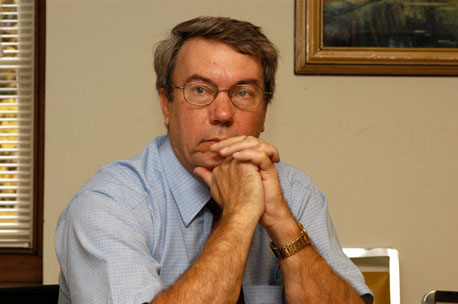
What would you do if you realized your brother was the Unabomber? Not a question most people have had to answer, but you can find out what it was like from someone who has at 12:30pm today. After we check in on the goings on in Annapolis, as the special session heads toward a close as early as the end of the week, we'll be joined by David Kaczynski.
After the Unabomber's Manifesto was published in the NY Times and Washington Post, David recognized his brother's writing style and was faced with an agonizing decision, which would change the course of his life completely. Join us to find out what happened, and about the work that David is currently doing as executive director of New Yorkers Against the Death Penalty.
-Justin

What have we learned from struggles to wage war, and struggles to wage peace, in the past? What can we learn from today’s conflicts?
We'll be reflecting on these questions, and maybe a few others, with veterans of war and veterans of the peace movement, and at least one person who is both of those things. -Justin
Lerner and Loewe's My Fair Lady opened on Broadway in 1956 to critical raves and, at the time, went on to become one of the longest running musicals in Broadway history. The show also made a star of Julie Andrews. The current touring production of My Fair Lady is playing at the Hippodrome. This production is direct from London's West End and with top flight talent on stage and behind the scenes. The reviews and word of mouth on the production say it raises the bar for all other touring productions.
-Marcus

Thirty years ago, male students were in the majority on college campuses. Today women are outnumbering men at colleges and universities. While the number of women is increasing; educators are asking where have the boys gone? There's been a significant drop in the number of men applying and attending college which is baffling educators.
-Marcus

This picture was taken in a refugee camp in Kenya in 2003, where Sudanese refugees wound up after fleeing first their own country, and then refugee camps where they had settled in Ethiopia. For more on their story, see this article.
It's written by Charles London, who'll be joining us from 1-2pm today. Charles left Baltimore, where he grew up, to work for Refugees International. His experiences led him to write a book called One Day the Soldiers Came, in which he tells the stories of children displaced by war who he met over the past few years.
He was in Burma during the recent unrest there. He recorded his observations in a piece for the NY Times magazines; that piece is here.
One more thing to check out.. Charles was interviewed on All Things Considered recently; that interview is here.
-Justin

The Maryland legislature is in the midst of a special session called by Governor Martin O'Malley. The major issue facing this special session is the state budget. While Maryland is reported to be the richest state in the union, it faces a budge deficit. To remedy the situation the governor is putting forth a plan that calls for generating more revenue.
However generating more revenue might come at a cost to existing programs. If that's the case, to repair the fiscal health of the state, where should funds be reduced? What programs, if any should be cut? Today, in our ongoing look at the special session, we'll look at the state budget from three perspectives.
-Marcus



Last month MICA and the Maryland ACLU teamed up to put together a rather unusual celebration for Constitution Day, a holiday that not many people bother to celebrate in the first place. They put together an event devoted to the First Amendment, and the right of free speech. Who better to speak on this topic than the trio of John Waters, Ralph Nader, and Helen Thomas? That's what someone thought, at least, and they were all brought together for a couple hours. It turned out great; the auditorium at MICA couldn't even fit everyone who tried to get in. So, for those of you that missed it the first time, we'll be playing it as a two hour special, from noon-2, on The Marc Steiner Show today. To hear the complete version, because we had to cut a little bit for time and edit a few words here and there, ironically enough, just go to www.wypr.org and download the podcast anytime in the next month.
-Justin

Some interesting stats on vacant houses and property in Baltimore:
13% of the total property in the city is abandoned
there are about 30,ooo abandoned buildings and lots in Baltimore
the city owns about 1/3 of the abandoned property
the city owns about 4,000 abandoned buildings and 6,000 abandoned lots
the city owns about 25% of vacant buildings
All of these figures are taken from here, the Housing Authority's "A Plan to Create The Baltimore City Land Bank." Basically, the city is planning to sell many of its vacant properties cheaply as soon as next July. The city is also planning to acquire more vacant properties, with the intention of selling them, as well.
If you're wondering if and how you'll be able to buy a cheap house to fix up, tune in at noon today, when the author of the Land Bank Plan and the head of Baltimore Housing, as well as housing activist Michael Sarbanes, will be here to help us figure out how this is all going to work.
And for a look at a land bank program that has already been implemented in Flint, Michigan, another town full of abandoned properties, take a listen to this story from Morning Edition today.
-Justin

-Jessica

Sunday, October 28 at 8:30 pm at the Charles Theater and Tapas Teatro, the Maryland Film Festival will hold its first fundraising event. One of the highlights will be a panel discussion entitled The Rothman's: An Insider's Look at the Movie Business. The talk will feature Donald Rothman, founding partner of the law firm Gordon, Feinblatt, Rothman, Hoffberger & Hollander, and one of the founding members of CENTERSTAGE. Also taking part are his sons John Rothman an actor.writer and producer and Tom Rothman, Co-Chair of Twentieth Century-Fox Film Entertainment.
In preparation for Sunday's program, Marc spoke with the Rothmans and Jed Deitz, director of the Maryland Film Festival.
-Marcus

You may have heard Marc interview Roger Kamenetz in the past. He's best known for two of his books, The Jew in The Lotus and Stalking Elijah. His newest book is all about interpreting dreams in the context of spirituality. It's called The History of Last Night's Dream.
It's crazy to think that we all spend about a third of our lives asleep, and who knows how much of that time dreaming, but most of us give it so little thought during the other two thirds of our lives, when we're awake. I rarely remember my dreams past the moment I wake up, but if anyone has had any interesting experiences with dreams lately, we'd love to hear about it.
-Justin
I mean WOW, just WOW. Right? Join us today. We're going to be talking about rape in the modern world--how we deal with it socially and legally. How does our culture treat people who allege they were victimized? How do we treat alleged assailants? Here is a link to the op-edwritten in The Baltimore Sun by Glenn Sacks, one of our guests, in which he supports the University of Maryland's decision to deny protesters a forum to publicly name alleged rapists. Bring your comments and questions....“The concept, undergirding the Battle holding, rooted in ancient laws by English common law, views the initial ‘deflowering’ of as the real harm or insult which must be redressed by compensating, in legal contemplation, the injured party – the father or husband. … [I]t was the act of penetration that was the essence of the crime of rape; after this initial infringement upon the responsible male’s interest in a woman’s sexual and reproductive functions, any further injury was considered to be less consequential."
-from Court of Special Appeals, Opinion by J. Davis, filed February 9, 2007
-Jessica

Of all the people in the world who love to spout off about politics, few make a living doing it. Even fewer get paid to do it in The New York Times twice a week. This Paul Krugman must be a pretty smart guy.
He certainly has a lot to say. Click here to see his work for The NY Times, and also a link to Krugman on The Colbert Report! Click here for his own page with an extremely extensive archive of his writing. There is even an official Krugman site with tons of archives, other people's writing about Krugman, and much more. Click here for that.
Lastly, for a review of his new book, The Conscience of a Liberal, on salon.com, click here.
And, of course, tune in at noon today to here Paul Krugman on The Marc Steiner Show, then share your thoughts right here.
-Justin


Global warming has been most noticeable in the Antarctic. Significant changes in the environment have resulted in the melting of the polar ice caps, increased water levels and the threat of extinction to animal life. Marc's guest this hour is award-wining photographer, lecturer and environmental activist Sebastian Copeland. In his new book Antarctica: the Global Warning Copeland documents in photos and text, his personal insights about the increasingly rapid pace at which the arctic regions are melting.
- Marcus
Related Links
Sebastian Copeland interview on You Tube

-Marcus
Related links Arthur Murray Dance Studios The Promenade Dancesport Facility
1 a: a predicament affording no obvious escape b: deadlock2: an impassable road or way : cul-de-sac
Thanks to Webster's for the above definition. Impasse is the word of choice for the contract dispute between the Baltimore Teachers Union and the Baltimore City Public School System. If you are not a teacher or school administrator, you might be wondering what is such a big deal about some planning time that it is stalling the entire contract negotiation process, leaving teachers working without contracts.
I'm sure that our two guests today, BCPSS CEO Andres Alonso, and BTU President Marietta English can shed some light on the issue for you. We'd love to hear thoughts from parents, students, teachers, and school administrators about how they view this dispute, and how the impasse is effecting them. Call 410-662-8780 during the show at noon today, or leave your thoughts here on the blog!
Poll: Who should have their way in this situation?
-Justin

-Jessica

If this picture triggers horrible flashbacks to your school cafeteria lunch days, I'm sorry. If this picture looks like your lunch today, I'm also sorry. If this picture is making you hungry and you're offended by the first two sentences, I'm sorry, as well.
I never had cafeterias in my elementary schools, so I always had to bring lunch to school. So, I don't have memories of frozen peas, carrots, corn, processed meat, cheese, white bread, boxes of milk, and whatever the hell is in the top right corner of that tray. Jello? Probably...
The contradiction between people's desires to raise healthy kids and the food we feed kids, whether in school or at home, is one of those things you might not ever think about, but once you do, it's hard not to wonder what on earth we're doing. If we want kids to be healthy, why are school lunches notoriously unhealthy? Why are kids menus full of fried, greasy, fatty foods like pizza, french fries, and chicken nuggets? Why do we assume these are the types of foods that kids naturally like?
At 1pm today, we'll talk about some different approaches to feeding kids, again, both in and out of school. For some interesting ideas, check out The Food Studies Institute, started by one of our guests today, Antonia Demas.
If you're a parent, what have your experiences been when it comes to feeding your kids? Are you happy with the food that they're given in school?
-Justin
 Marc's guest this hour is Jayne Miller, Chief Investigative Reporter for WBAL-TV. City Paper has named her one of Baltimore's best reporters. Jayne Miller's work as a general assignment reporter, consumer advocate and investigative reporter has earned numerous awards and resulted in changes in legislation and public policy.
-Marcus
Marc's guest this hour is Jayne Miller, Chief Investigative Reporter for WBAL-TV. City Paper has named her one of Baltimore's best reporters. Jayne Miller's work as a general assignment reporter, consumer advocate and investigative reporter has earned numerous awards and resulted in changes in legislation and public policy.
-Marcus
The Dalai Lama is in DC this week receiving the Congressional Gold Medal Award. Bush will become the first US President to appear publicly with the Dalai Lama, which is kind of funny in a twisted way, but not to the Chinese government.
Thomas Laird is going to be in DC for the occasion, and while he's there, he's making a trip up to Baltimore to join us in the studio at 1pm today. He has spent years living in Asia and written extensively about Tibet. His book The Story of Tibet is an oral history of the country as told to him by the Dalai Lama himself over the course of many visits to Dharamsala.
Funny side note: there is a small community of Tibetan Monks in East Baltimore, including one who fled Tibet with the Dalai Lama. We were hoping to have him and some of the others also join us for the show today, but they're all in DC with His Holiness.
-Justin

-Jessica


Lots of people pitch show ideas to us all of the time. Sometimes they're good, sometimes they're not, but we only have so many hours in a week, and we could never get to them all even if we wanted to. The idea for his hour's show came to us from the Jewish Museum of Maryland, who want to promote a new exhibit they have opening on Sunday. In general, if someone is pitching an idea that is a thinly vailed promotion, I would politely decline. In this case, however, I realized this idea had some great potential for us. The exhibit is called "Voices of Lombard Street: A Century of Change in East Baltimore." The idea of actually bringing together a group of people with deep roots in one neighborhood, so that we could explore the history of the neighborhood from a personal level, is what really appealed to me in putting this hour together. In a place like Baltimore, the combination of neighborhood histories and personal stories always makes for something interesting. If you, or someone in your family, grew up around East Lombard Street, have memories of the area at different times, or live there today, we'd love to hear from you. As always, you can call or email while we're on the air at 1pm today, and also leave your stories here. We're thinking about adding a new segment on the air in which we'll read emails and blog posts from listeners reflecting on shows that have already aired either later in the week or the following week. So, don't hesitate to keep writing after each show. Go here to see more pictures! -Justin
Today we're going to return to a topic we've been covering since the story broke, and that's the case of wounded soldiers being discharged from the Army under Chapter 5-13 "Personality Disorder." This enables the Army to avoid paying medical and disability benefits for these soldiers. It was being applied despite the fact that these men passed the Army's rigorous psychological entrance examinations and displayed no prior evidence of mental disorders. Joshua Kors from The Nation is the one who broke this story (the original article is here, and he's back with an update, which you can read here. We'll also be joined by Congressman Phil Harefrom Illinois, who has introduced legislation to stop this kind of discharge, and from Congressman Bob Filner from California, who is the Chairman of the House Committee on Veterans Affairs.
We'll also have a statement from the Army. They declined to come on live. You can read their statement here. You can also read the statement they sent us on March 27, 2007 here. -Jessica  Beverly McIver "Oh Happy Day" 2001 Oil on Canvas 60 x 55 3/4 in.
I first became aware of Beverly McIver in the November 2006 episode of Art News. The images of her paintings stopped me on my tracks. She depicted herself, a black woman, in black-face. She played off the "Mammy" stereotype. She painting herself dancing with a white man, but scratched her face out. She painted portraits of her mentally handicapped sister, whom she is the primary caregiver for.
I have ambivalent feelings about contemporary art. I walked into a museum in Paris once where a whole room was filled with a table that had potatoes dumped on it, with wires going in and out of the potatoes. At that moment, I sort of broke up with contemporary art. So much of it feels derivative and irrelevant to me. So much of it is absurd and almost obscene in how removed from any real sense of aesthetics it is. Her art escapes that. To me it has both contextual and technical beauty and worth. It is brave and actually manages to shock and unsettle without resorting to ridiculous extremes in terms of medium. So when the card announcing her October show at the C. Grimaldis Gallery came, I told Marc, "You have no choice. You are interviewing this woman!" and he intelligently agreed with me.
I've prepared a page with some of her work on it. Click here. I hope you like her stuff as much as I do.
-Jessica
Beverly McIver "Oh Happy Day" 2001 Oil on Canvas 60 x 55 3/4 in.
I first became aware of Beverly McIver in the November 2006 episode of Art News. The images of her paintings stopped me on my tracks. She depicted herself, a black woman, in black-face. She played off the "Mammy" stereotype. She painting herself dancing with a white man, but scratched her face out. She painted portraits of her mentally handicapped sister, whom she is the primary caregiver for.
I have ambivalent feelings about contemporary art. I walked into a museum in Paris once where a whole room was filled with a table that had potatoes dumped on it, with wires going in and out of the potatoes. At that moment, I sort of broke up with contemporary art. So much of it feels derivative and irrelevant to me. So much of it is absurd and almost obscene in how removed from any real sense of aesthetics it is. Her art escapes that. To me it has both contextual and technical beauty and worth. It is brave and actually manages to shock and unsettle without resorting to ridiculous extremes in terms of medium. So when the card announcing her October show at the C. Grimaldis Gallery came, I told Marc, "You have no choice. You are interviewing this woman!" and he intelligently agreed with me.
I've prepared a page with some of her work on it. Click here. I hope you like her stuff as much as I do.
-Jessica

or this?

-Jessica

It's my pleasure to announce that Ed Jones will be joining us in the studio today. I think his work speaks for itself. If you haven't read him, yet, check out The Known World, Lost in the City, or All Aunt Hagar's Children. And listen to what he has to say today.
-Justin
 Last week, the unseasonably warm weather, and the death of one runner, stopped the running of the Chicago Marathon. Saturday the streets of Baltimore will be filled with runners taking part in the Baltimore Marathon. Everyday from Inner Harbor to Charles Village to the suburbs you'll find people, from experienced marathoners to recreational joggers getting in a run.
Since the start of the running craze in the '70's, one of the most popular fitness goals is to complete a 5K, half-marathon or marathon. But how do you get started? This hour is for novice and experienced runners. If you're thinking of beginning a running program or improving your current program check-in with our panel of experts. We'll hear from Jim Adams, owner of the Falls Road and Fells Point Running Stores, Dr. John Senatore Union-Memorial Podiatrist and Lee Corrigan, President of Corrigan Sports Enterprises.
-Marcus
Last week, the unseasonably warm weather, and the death of one runner, stopped the running of the Chicago Marathon. Saturday the streets of Baltimore will be filled with runners taking part in the Baltimore Marathon. Everyday from Inner Harbor to Charles Village to the suburbs you'll find people, from experienced marathoners to recreational joggers getting in a run.
Since the start of the running craze in the '70's, one of the most popular fitness goals is to complete a 5K, half-marathon or marathon. But how do you get started? This hour is for novice and experienced runners. If you're thinking of beginning a running program or improving your current program check-in with our panel of experts. We'll hear from Jim Adams, owner of the Falls Road and Fells Point Running Stores, Dr. John Senatore Union-Memorial Podiatrist and Lee Corrigan, President of Corrigan Sports Enterprises.
-Marcus

Are slots coming to Maryland? The Governor hopes so, because he needs to raise some money to cover the state's budget deficit, and the less he has to raise taxes, the happier we all are. Slots have been a politically divisive issue for years, though, and bringing them here is far from a done deal, yet.
Marc has been covering slots and gambling, discussing how, when, if, why, and where they might find a home in Maryland as long as he's been on the air, and today the debate continues. We're joined by Ron Wineholt from the Maryland Chamber of Commerce, Aaron Meisner from Stop Slots Maryland, and James Karmel, a history professor from Harford Community College with a new book on the way called Gambling on the American Dream: Atlantic City and the Casino Era.
-Justin