
Marc’s Blog

June 10, 2008

06/10 Marc on Larsen’s resignation from the PSC

 Steve Larsen's Resignation

I am not surprised that Steve Larsen resigned as the head of the Public Service Commission. When community activists railed against him and O’Malley as sellouts to Constellation Energy, I always defended Larsen as a man of integrity and honesty. He believed in using the tools of the government to make the public sector more responsive to the citizens. He was a quiet, diligent and intelligent crusader on the inside, whether it was health insurance or regulating energy.

I think he resigned not to go back to the public sector to make more money but out of frustration. When the state reached the deal with Constellation Energy that ensured that the PSC would have no subpoena power, it took the teeth out of the PSC. Larsen would not be able to get to the bottom of any sweetheart deals between the Constellation and its subsidiary BGE to unearth whatever potentially unscrupulous deals were made to purchase energy at the consumers’ expense.

I wondered aloud how long Steve Larsen would stay after this. He was crusader for the people who had his cape destroyed. He chose to walk away rather than plummet to the ground.

Given the price of oil, the cost and real crisis we are facing with electricity generation and looming public wars over our energy future we need more caped crusaders or this secure world of ours could be in trouble. -Marc

Related blog posts:

04/09/08 Looking back at the session

03/28/08-Marc's argument against the settlement

03/03/08 Marc on what is missing in the investigation


Banning Little Cigars

What would it really accomplish to ban the sale of small cigars in the city of Baltimore? What I am writing about is the Mayor and Health Commissioner wanting to ban the sale of individual little cigars that many young inner city folks use to make into blunts. Blunts are cigars stuffed with marijuana. Many young people and young adults buy the individual cigars because they can’t afford to buy a whole pack. They come in flavors that are very enticing to some such as watermelon, sour apple, and grape. Some people just like to kick back and have a smoke to relax. Much like more well off patrons who go to cigar shops and throw big bucks for a wannabe Havana cigar. I never did like them even when I smoked though I do like a Havana a few times a year.


Let me admit, I always have an initial visceral response to the banning of most anything. Outlawing substances that people choose on their own to ingest does nothing but increase criminalization of what is otherwise activities of individual choice. Tax products, go after unscrupulous manufacturers and distributors, and find creative ways to combat it. Don't ban it.


If you ban the sale of cheap cigars by corner stores in the inner city then some enterprising young hustlers will buy them up and sell them on the street. I understand what the city is trying to accomplish, it is just the wrong way to go about it.


As some City Council representatives said to me “What do we do about the young people on the corner who terrify the older neighbors … it really is a generational thing . .lack of respect for the elders….” The response has to be much more profound than banning little cigars.


Take this to the state legislature, ban the sale of individual cigarettes state wide, tax the cigars, put warning labels on them, take on big tobacco, their Annapolis lobbyists and friends in the legislature, start an education campaign about health and smoking theses little flavored cigars. Open recreation centers, work programs for youth and hit the streets with street workers to challenge the street culture.


Banning cigars sales… a waste of time, money, energy and it is just the wrong thing to do.


-Marc
 

June 9, 2008

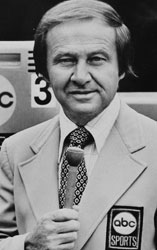
Jim McKay

We lost a great voice on the air last weekend with the death of Jim McKay. He was a gentleman of the airwaves in radio and television. I will never forget, no one who heard it will ever forget, Jim McKay’s broadcast during the 1972 Munich Olympics when the Israeli athletes were kidnapped and murdered by Palestinian terrorists. He was off that day, but came in, and in his gentle, deeply human manner walked the world through the terror and impending tragedy of that moment.

I remember being so deeply moved by him and I remember my joyful anticipation almost exactly ten years ago, on May 29th, 1998, as I was about to interview him for the first time. He was as unassuming in person as he was humble on the air. What a lovely human being he was. We did not stay in close touch but we talked from time to time.

His life has a lot to teach us about how to behave on the air and as human beings. He was a Baltimorean and a Marylander.

He loved his family, his horse and his work. We will miss him. Our sympathies go out to all in his family.

-marc
June 6, 2008

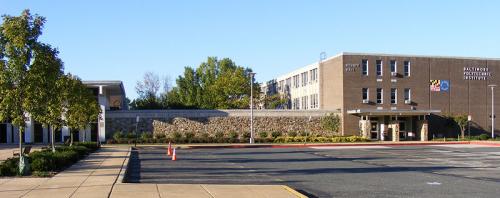
A Tragic Mistake at One of Baltimore’s Best Public High Schools

CEM intern Stavros Halkias is an alumni of Baltimore Polytechnic Institute. We're excited to share his writing with our listeners. Please let us know what you think. Baltimore Polytechnic Institute is one of the best schools in the state of Maryland. It is consistently one of the best performing schools in the state with regard to standardized testing, has a list of influential and successful alumni that is both expansive and ever growing, and is often vaunted as one of the few Baltimore City Schools offering a world class education to its students. The success of the school is due, in no small part, to extremely talented and dedicated faculty that are willing to put their students first. In the recent history of Baltimore Polytechnic Institute, or Poly, there was no faculty member more talented or dedicated to his field than Dennis Jutras. Unfortunately, Dennis Jutras will be nowhere to be found when Poly students return to school in September. Click "Read More" below for the rest of this article.

June 6, 2008

06/06 Marc on 1968

"Where were you when...?"

Resurrection City, June 1968. Photo by Ollie Atkins.  See more.


I remember clearly where I was for all the horrible assassinations of the 1960's.


I remember my quiet walk with Adrienne Cooper (who later died from a back alley abortion) around Stockbridge Bowl the day of John F. Kennedy's assassination. We walked and reflected on the world we lived in light of that horrible event.


I remember two years later standing in line to view Malcolm X’s body as it lay in state in Harlem. I had taken a bus to New York as soon as I heard about the assassination.


I was living in the heart of the D.C. Ghetto, and pulling up to my apartment in my old VW bug when I heard the news on the radio that Martin Luther King had been assassinated. I was in the heart of the city, our nation’s capital, and within hours the city was burning all around me. I walked through that rebellion in the wake of his death.


When Bobby Kennedy was killed I was living in a plywood shack between the U.S .Capital and the Washington Monument with thousands of others in a place called Resurrection City.


Resurrection City was an encampment of thousands of poor people-Black, White, Puerto Rican, Mexican American and American Indian. They came from mountain hollers, the rural south, Indian reservations, small mill towns and inner cities. The Poor People’s Campaign, one of King’s last acts before he was assassinated, was an amazing movement because of its racial unity and its class-consciousness. It was led and driven by the poor themselves. They marched on D.C. from a dozen routes from across the nation. They took over the mall, built the city out of plywood. We slept there, cooked our meals there, had meetings, studied, played and created theater. This movement went beyond notions of white power or the new slogan of Black power. This was the people’s power, the power of the poor united across color lines. There were many in both Black Nationalist and white conservative movements who despised the interracial power of this movement and many wealthy supporters of civil rights were put off by the class demands of this group. I think this march may have heralded the end of the civil rights movement. Right now the mainstream media is doing story after story about the magical, mad, terrifying and glorious year of 1968-but in all that reporting, almost nothing has been said about the Poor People's Campaign. A notable exception is the public radio program Weekend America which did a great piece on Resurrection City as a part of their series This Weekend in 1968.  Click here to for their interviews and multimedia slideshow.


Bobby Kennedy was one of those who supported the idea of the poor marching on the capital. His death brought a pall over our encampment. His body passed us on the way to the Rotunda. The mourning was palpable, soulful and deep among the thousands who camped on the mall that summer.


It has been forty years since a politician like that captured the imagination of America. Bobby Kennedy was loved by all the communities camped out on the mall that summer and by working and middle class people across our country. You can’t help but ponder what America might have become had he become the President of the United States.


Do we have another running now like that? Do we?


What do you think?

-Marc

June 5, 2008

6/05 Marc on the end of the 2008 Democratic Primary Season


The Marc Steiner Show Returns!


OK, folks we are about to launch our new show on WEAA. In the beginning we will only be on WEAA once a week, but we will be moving to a daily show in September.


For now, join me every Wednesday morning at 9 AM on 88.9, WEAA, for a live show. We will have some town meetings over the summer so you can join us live in the evening, as well.


At last, a candidate!


Tell me what your take is on the Presidential election. What do you make of Hillary Clinton's speech? If the delegate count is what it is and the voting is over then should she not concede? Should she not now unite in a way that allows the increasingly divided Democratic electorate to heal and unite?


In her defense, Senator Clinton has stated that she has won the popular vote. The issue of the popular vote is real given how cheated, dismayed and angry Democrats felt in 2000 after Al Gore won the popular vote but did not attain the presidency. However, is it right that Hillary Clinton's camp counts Florida and Michigan in vote counts when those primaries were invalid? When Senator Barack Obama wasn't even on the ballot in Michigan?


That brings up another issue. I thought it was insane for the Democrats to disallow Florida and Michigan from participating in the primary elections. The whole primary system is ridiculous to begin with. It is an anarchic system with each state vying for supremacy of importance. Iowa and New Hampshire, whose caucus and primary did not come into importance until 1972 and 1953, respectively, are anachronisms. The entire system of primary and general elections needs to be shortened and simplified.


All that not withstanding, should Senator Hillary Clinton concede and bring her troops in for the battle for November? Or should she fight on in hopes of his stumbling bloody before the finish line?


I really want to know where you are on all of this.


More soon....

-Marc

June 2, 2008

Home sweet home!

Hello everyone,

Jessica here, happy to be back in the good old USA. Nothing like two weeks out of the country to make you appreciate home again. Even if you have a wonderful time, as I did during the past two weeks in Vietnam, it is good to come home again. But enough of that; I have so much more to tell you about my trip.

Click "Read More" below for more stories and pictures.

May 29, 2008

Vietnam Update

Hello friends,

Jessica here with an update from Vietnam.

The past few days have been among the strangest, most challenging and most wonderful of my entire life. There is no way I could even begin to do them justice in this blog post. All I can do is bring you a basic outline of what has transpired over the past few days and promise you that soon after I return home we will begin work on a documentary to bring you this amazing story.

Click "Read More" below for the story and pictures.

May 28, 2008

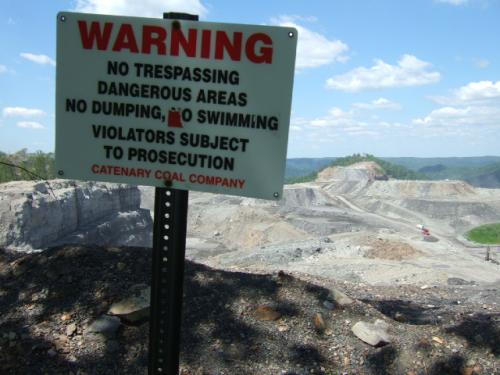
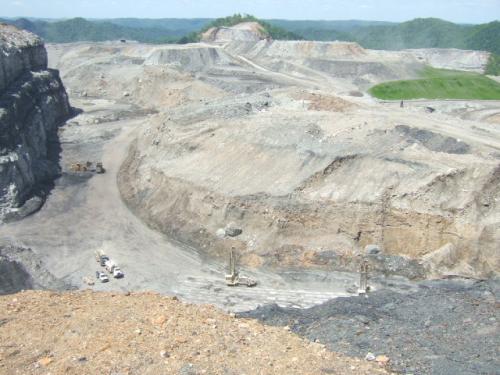
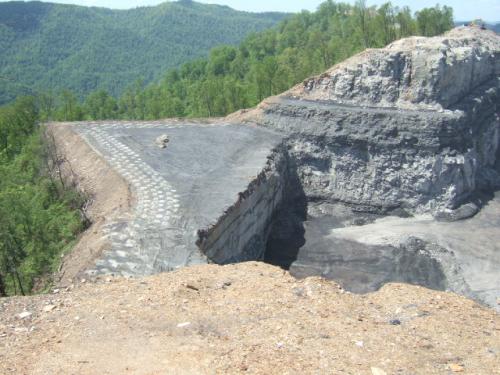
This is what mountaintop removal looks like


These are photos I took looking out across an active mountain removal site on Kayford Mountain in West Virginia.  It's hard to get a feel for the size of the mining site without being there.  It's even harder to imagine what it looked like in its natural state, but look at the dark green, tree-covered hills all around it to get some idea.

We'll be bringing you more about what's happening on Kayford Mountain soon, but I wanted to get these images out there right away.  Larry Gibson showed us around here.  He grew up on Kayford Mt. and now the land his family and others lived on for generations is being irreparably destroyed.  He came with his cousin that day to mow the grass in two family cemeteries that are here.  We walked past them on the way to what is now a cliff over the mining site where I stood and took these pictures.  Another of their cemeteries has already been destroyed by the mining company as they've blasted the mountain apart and carted away ton after ton of coal from inside of it.

Larry told us not to waste his time.  He wasn't showing us around for no reason; he wanted to make sure we were going to do something about what we saw.  Larry is for abolishing the use of coal altogether, despite having family members who work in the industry and are upset by his stance.  Unlike many people we spoke to who expressed support for continuing mining in a responsible, less destructive manner, Larry told us he doesn't believe it's possible to mine and use coal in a way that is not harmful.

Over and over again last week, people mentioned supporting the Clean Water Protection Act as the most important thing anyone can do right now to help bring an end to mountaintop removal.  Contact your Congressmen and make sure they support it!

Please also check out our new forum on mountaintop removal, and these two blog posts from West Virginia last week - 1 & 2.

-Justin

May 26, 2008

Another update from Vietnam

Greetings from Pleiku

I am sitting on my bed under a mosquito net in Pleiku, Vietnam, and I finally have a few spare moments to update you on the latest adventures of your favorite globe-trotting producer. Click "Read More" below for stories and pictures.

May 22, 2008

Hello from Hanoi!

Hello from Hanoi!


Well I see that my coworker Justin is trying to outdo me with multiple blogs from his trip to West Virginia. Since it is only 5:30 am at home and he is sure to be asleep, I will take this opportunity to do a little reporting of my own! Click "Read More" below for stories and pictures.

May 21, 2008

Day 2 in Coal River Valley

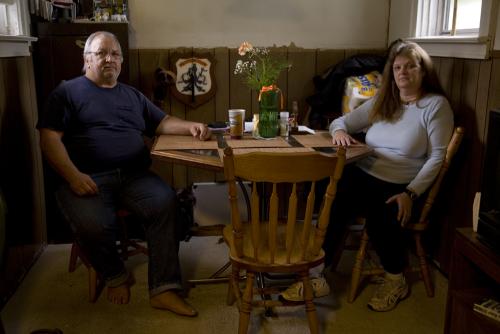
Butch & Patty Sebok at home in Seth, West Virginia. photo: Antrim Caskey

We spent our first full day in West Virginia visiting people in their homes, taping interviews. People shared incredible stories with us that we'll be bringing back. I recorded about 6 hours of audio today alone. We saw a 90 year-old woman's fingers turn black with coal dust from running them across her tv screen. Again and again, people expressed their respect for the old ways of underground mining. At the same time, they spoke with outrage about mountaintop removal and the unprecedented level of destruction coal companies have caused in this area over the past 25 years or so.

Antrim took this picture of Patty Sebok and her husband Harry "Butch" Sebok in their kitchen. Patty is a community activist who works for Coal River Mountain Watch. Butch is a union miner who worked underground for almost 30 years. He was forced to retire when a doctor told him he risked paralysis if he continued working after an injury on the job that resulted in a herniated disk.

We'll be up bright and early in the morning to tape some more interviews before heading up Kayford Mountain to see an active mountaintop removal site and meet the last man holding onto his home as the mountain is destroyed all around it. I encourage everyone to do their own research to learn more about mountaintop removal and the history of coal mining in West Virginia and beyond. Please let us know if you have any questions or thoughts to share.

-Justin

May 20, 2008

CEM Goes to West Virginia

When we flip on a power switch in our homes, where does the electricity come from? How is it generated? There's a good chance it's from a coal-fired power plant. Click here for an easy way to trace your power source with nothing more than your zip code. With all the talk of developing new, sustainable energy sources, we're still relying heavily on the old standbys like oil and coal.

Last November on The Marc Steiner Show, we had a coal industry spokesperson and a group of West Virginia residents as guests on the show to discuss coal mining. The conversation centered around mountaintop removal, one of the most widespread and quickly growing methods of mining coal in use today.

We were all blown away by what we learned in the process of putting that show together, and since then we've been wondering why this issue hasn't been getting the attention it deserves. So, we decided that it's something we should keep an ongoing focus on. Look for us to have continuing coverage both on this website and on the air.

Rather than covering the issue from afar, we decided to go straight to the source. This morning, I set out for the coal fields of southern West Virginia, along with photojournalist Antrim Caskey, who's been working for the past 3 years to get people to pay attention to and do something about the environmental, including human, destruction caused by modern day coal mining practices in Appalachia. We'll be spending this week down here lining up as many people as possible to contribute first-hand coverage to CEM on an ongoing basis. We'll also be coming back with tons of new audio, photos, and video.

We're spending the night in the Coal River Valley with Debbie Jarrel and Ed Wiley. You'll hear a lot more about and from them if you stay with us here, for now check out one of the major projects they've been involved with, advocating for the safety and health of the students, teachers, and staff of Marsh Fork Elementary School. This site is full of info on that; briefly, it's a school down the road from them sitting right down the hill from a huge, leaky sludge impoundment, or what Ed describes as a 2.8 billion gallon toxic waste dump.

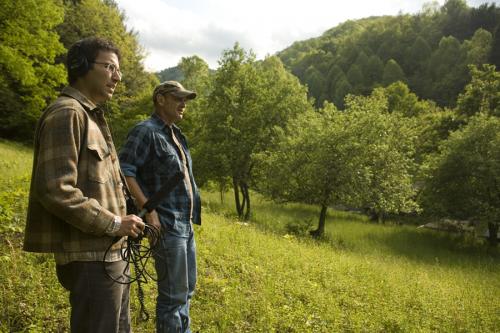
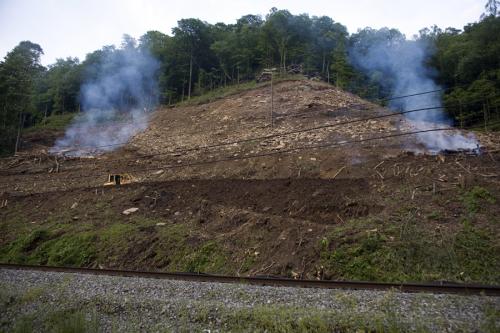
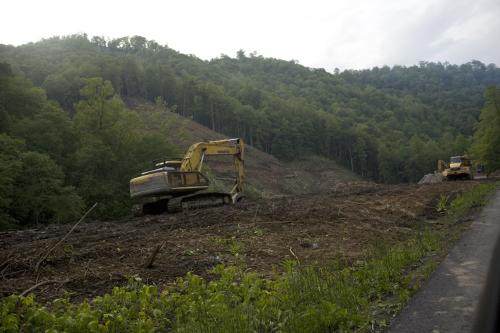
The picture at the top is from this afternoon, during a beautiful hike Ed took us on in the woods behind his home. The pictures below are from this evening. They're taken from the road, as we drove past an area being cleared by a coal company to put in a new beltline to transfer coal from the mining site to the processing plant.

all photos by Antrim Caskey